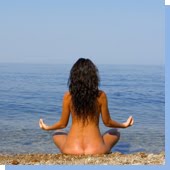
SyltSylt is a northernmost island of Germany. It famous for its beaches, thatched-roof houses and spectacular dune landscape. The Thatched-Roof HouseThe island of Sylt is one great huge sand-dune around by the North Sea. And that's the longer continuous beach in the Germany about 40.2km. To the west of Sylt is Denmark and United Kingdom. Sylt became famous for "the rich and the naked," when the entire island became one big party.Sylt is a big, little place. The largest town is Westerland, which sits bang in the middle of the island. Hörnum lies to the south while at the northern end is List, the most northerly town in Germany.Sylt Beach
Sylt is also well-known for its nude sandy beaches.It established the first official nude beach in Germany in 1920. The island of Sylt, one of the Frisian Islands in the North Sea, is known as Germany's St Tropez. Smart Germans flock here in July and August to top up their all-over tans, see and be seen. The island is connected to the mainland by a causeway. It's a charming place with thatched-roof houses, red-and-white striped lighthouses, and, on the beaches, Strandkoerbe (distinctive shell-shaped sun loungers). The west coast of the island is given over to wide white-sand beaches. Buhne 16 is the most tolerant nude beach.In the 20 century this beach attracted the nudism people. They uphold the natural brown skin and nude swim. And they say Sylt can make a special brown skin color. In there, they have the rules too.1. Respect the others. Don't stare at the other people's body and no public sex on the beach.2. Don't nude out of the official nude area.3. No photography except you ask for permission.If you feel cold, head to the beach sauna there can warm your body up.Here some picture of the Sylt Beach:


Silver MarketMexico is the biggest silver producer in the worldand and its silver's capital is Taxco. Travelers will find an incredible amount of Taxco jewelry, showcases at the largest Taxco silver market in the world. The city has almost 1,000 Taxco silver stores and tourists can choose from a wide variety of Taxco jewelry. Prices are moderate, with real, quality Taxco jewelry pieces ranging in cost from $1 to about $200 for high-end trinkets. Shops also feature a nice mix of locally produced stone sculptures.Taxco produces some of the best, most imaginative, original and unusual handmade silver Jewelry in the World.Every Saturday in the main street there is a silver market besides the shops already established. It is on this day that the town of Taxco comes to life because many people come from many parts of the country to buy the silver that they will later sell in places like Acapulco, Cancun and other resort towns.Silver has always played an important role in Taxco's history, as far back as the early 1500's. The silver mines have been worked since the time of Cortes, four centuries ago. The Mexican government has declared Taxco a national monument and has made great efforts to preserve the colonial atmosphere of the city. A steady stream of foreign visitors pound Taxco's narrow, twisting cobblestone streets gazing at the red tiled colonial homes.National Silver Day:As early as 1937, an American born, Taxco Spinhabitant, silver designer William Spratling began the fair's celebration as an appreciation party to honor the artisans that produced his designs. Since then the fair has escalated to the national level, hosting a competition of Mexico's best silversmiths and some of the world's finest artisans.Artists from all around the area come to display their silver and stone workings. A literary festival also takes place during this week and is one of the most fun events to visit in Taxco Mexico. People will also enjoy checking out the near by Mexico ruins Taxco offers.The National Silver Fair was inaugurated in 1973 when the government launched a competition to present a National Silversmith Award. Music and dance performances take place in Taxco's main square, Plaza Borda, and every imaginable trinket exquisitely fashioned from the precious metal is on sale. The local beauties compete to win the crown of Silver Queen.Here some picture of Silver Market in Taxco :


 Vintage Taxco :


 And Beautiful Narrow Street in Taxco:


Australia's most remarkable natural gifts - The Great Barrier Reef
The Great Barrier Reef is one of the seven wonders of the natural world, and pulling away from it, and viewing it from a greater distance, you can understand why. It is larger than the Great Wall of China and the only living thing on earth visible from space. The Great Barrier Reef is the largest coral reef in the world, roughly parallel to the coast of Queensland, Australia, for almost 2,000km. Australia has almost 1/5th of the world's reef area and most is located in the GBR.
Washed by the warm waters of the South-West Pacific Ocean the perfect environment is created for the world's largest system of coral reefs. The Great Barrier Reed is of such pristine condition that it was listed by the World Heritage Trust on 26th October 1981 as a protected site and is therefore managed by the Great Barrier Reef Marine Authority to ensure that its beauty is maintained for many generations to come.
History:
The earliest instance of organised tourism on the Great Barrier Reef was in the 1890s when Green Island became a destination for pleasure cruises offshore of Cairns. By the 1930s tourist resorts had begun to develop at Green Island off Cairns and at Heron Island further south. During the first half of the 20th century, most tourist activity was inshore and close to regional centres, being limited by boating technology and sub standard transport links to southern capitals.
Now the largest commercial activity in the Great Barrier Reef Marine Park has generating over $1b per annum, the marine tourism industry is a major contributor to the local and Australian economies.
Protected Species for the Great Barrier Reef Marine Park:
It contains the world’s largest collection of coral reefs, with 400 types of coral, 1,500 species of fish and 4,000 types of mollusc. It also holds great scientific interest as the habitat of species such as the dugong (‘sea cow’) and the large green turtle, which are threatened with extinction.
The species list of Protected Species for the Great Barrier Reef Marine Park include: helmet shells, triton shells, tridacnid clams, seahorses, pipefish, sea dragons, potato cod, Queensland grouper, barramundi cod, Maori wrasse, all groupers (Epinephelus) more than 100cm, whale shark, grey nurse shark, great white shark, freshwater and green sawfish, Sea snakes ,Crocodiles, turtles, birds, seals, whales, dolphins and dugongs.
Dangers Animal or fish in Great Barrier Reef area:
Blue Ring Octopus-
1. Hapelochlaena Lunulata - which is the larger and grows up to 20cm (8 in) across its stretched tentacles.

2. Hapalochlaena Maculosa - it is small and more common, weighing a mere 28 grams (1 oz). They are found in the shallow coral and rock pools of Australia.

Jelly Fish-
1. Box Jellyfish - possible one of the most dangerous creatures on the reef. The box jellyfish gets its name from the shape of its body. A box-shaped bell with clusters of tentacles extending from each corner. It has the potential to inflict fatal stings to humans. Found mainly around river mouths and muddy shadow water, they rarely inhabit the reef islands. "Stinger Season" is from November through to March. (To Movie "7 pounds" , Tim Thomas (Will Smith) suicide with box jellyfish in an icy water.)
2. Irukandji Jellyfish- Unlike Box Jelly Fish, Irukandji are found mostly in the deeper waters of the reef, although they may be swept inshore by prevailing currents. Divers and snorkellers are particularly at risk.

Shells 1. Cone shells - it look very pretty, but several types are known to be very dangerous to humans. The venom of some contains the most potent neurotoxins known to man. 
Fish
1. Lion fish- Lion fish have venomous fin spines that can produce painful puncture wounds. Fatalities, however, are rare. The fish have elongated dorsal fin spines and enlarged pectoral fins, and each species has a pattern of zebra like stripes.

2. Stone fish - With 13 dorsal spines that release a poisonous toxin when pressed, the Stone fish can inflict excruciating pain and possible death to the unwary. They dwell on stony, muddy bottom areas. Visitors walking on the beaches (especially at low tide) should always wear covered shoes with a sturdy sole.

3. Stingray - fatalities reported from stingray deaths are few and far between. Barbs on the stingrays' tail whip up when trodden on and can inflict serious lacerations and deep wounds. Tetanus is also a possibility if the wound becomes infected.  Sea SnakeApprox 15 species of sea snakes can be found on the reef. ALL OF THEM PRODUCE LETHAL VENOM. Having small fangs, they are not normally aggressive. There have been no reported deaths from sea snakes, however they should still be treated with respect.

Here Some nice view of The Great Barrier Reef: