History of Independence about Namibia: South Africa occupied the German colony of South-West Africa during World War I and administered it as a mandate until after World War II, when it annexed the territory.In 1966 the Marxist South-West Africa People's Organization (SWAPO) guerrilla group launched a war of independence for the area that was soon named Namibia, but it was not until 1988 that South Africa agreed to end its administration in accordance with a UN peace plan for the entire region.Namibia won its independence in 1990 and has been governed by SWAPO since. Hifikepunye POHAMBA was elected president in November 2004 in a landslide victory replacing Sam NUJOMA who led the country during its first 14 years of self rule.Kalahari:
 Kalahari Desert is Africa's "other" great desert, should not be written off just because it is the next-door neighbor of the Sahara. A grand and elevated (always more than 3,000 feet above sea level) interior plain that covers most of Botswana, huge swaths of Namibia, and a part of northern South Africa, the Kalahari extends for more than 360,000 square miles. The mostly featureless, gently rolling surface is blanketed by red (iron oxidized) sand that can reach depths of over 200 feet.The Kalahari was once much wetter than it is today. Pans, or "dry lakes," are evidence of this. Water once flowed into landlocked depressions where evaporation has left only the mineral and salt-rich silt. These sun-baked basins glow a blinding white.Since the mid-1970s, improved car access has opened the Kalahari's gleaming serenity to tourism and study. The best time to visit the Kalahari is between December and April when the rains bring the area to life and the harsh plains are transformed into swathes of lush grassland.Previously havens for wild animals from elephant to giraffe, and for predators such as lion and cheetah, the riverbeds are now mostly grazing spots, though leopard or cheetah can still be found.Animals can be found in Kalahari Desert:Cheetah
 Gemsbok
 Kalahari Desert Lion
 Springbok
 Eland
Eland Pangolin
 Blouwildebees
 Hyena
Hyena Jackal
 Meerkat
 Anteater
 Tortoise
 Brown Hyena
 Porcupine
 Here some Views of Kalahari Desert :


Guanajuato, Mexico
 Guanajuato is a state in the central highlands of Mexico. It shares its name with its capital city, Guanajuato, Guanajuato. Guanajuato means "place of frogs" in the local indigenous language. The local Tarascan Indians believed that the frog represented the god of wisdom. A rock formation outside of Guanajuato, looks like frogs. "Las Ranas" is the way to reference anyone from this state as frogs are their state animal. Guanajuato is the home state of former Mexican president Vicente Fox Quesada, and famous Mexican artist Diego Rivera and singer-song writer Jose Alfredo Jimenez
 After central Mexico and the Gulf of Mexico coast, Guanajuato was one of the first areas of Mexico colonized by the Spanish, in the 1520s, for its rich silver deposits. Guanajuato's colonial architecture is very well preserved along with over 35 old churches in its capital alone, and is very European in nature.In addition to the state capital city of Guanajuato, the state includes the cities of San Luis de la Paz, Acámbaro, Celaya, León, Salamanca, Irapuato, San Miguel de Allende, Salvatierra—the first city of Guanajuato, Cortazar, Tarimoro, and Dolores Hidalgo, the cradle of Mexican independence.The first battle in Mexico's war for independence resulted in a march from Dolores Hidalgo upon the capital of the state and the subsequent burning of the granary which held all the Iberian-born Spaniards (approximately 500 men, women and children), by peasants of pure Amerindian or mixed (Mestizo) descent who had been put to work in very harsh conditions
 The city played a major role in the Mexican War of Independence since it is the capital of the State Guanajuato in which Miguel Hidalgo started the independence movement. The Statue of El Pípila and the Alhóndiga de Granaditas still remind of that time.
 Today, Guanajuato's mines are still among the richest-producing silver mines in the world (historically one of the largest). The state also produces tin, gold, copper, lead, mercury, and opals. Guanajuato also leads the nation in shoe production and various farm products such as lettuce and potatoes. The state's main export products are motor vehicles and autoparts, footwear, leather goods, chemicals, electric machinery and materials, fruits and vegetables.
 The city was originally built over the Guanajuato River, which flowed through tunnels underneath the city. However, after years of raising buildings to accommodate repeated flooding, in the mid-twentieth century, engineers built a dam and redirected the river into underground caverns. The tunnels were lit and paved with cobblestones for automobile traffic, and this underground road network carries the majority of cars driving through the city today. It is one of the most noticeable features of the city.Here some nice view in Guanajuato:


Mamanuca Islands, Fiji
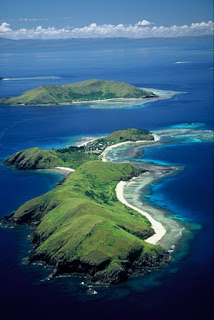
 The most magical vacation destinations in Fiji is the beautiful Mamanuca Island region. This chain of islands, with white sand beaches and tropical palm trees, can be seen from the mainland at Nadi stretching off in the distance across a shimmering blue ocean.There are over 15 islands in the Mamanucas, some uninhabited and some with beautiful beach resorts.The largest island is Malolo, which features several resorts including Malolo Island Resort and the luxury couples resort Likuliku Lagoon. Malolo Lailai (little Malolo) is nearby and also features more than one resort with the popular Plantation Island Resort and the Musket Cove Resort. This island has a runway, as does the island of Mana north-west of Malolo.
 The smallest islands include Navini and Wadigi, each offering resort accommodation.
 Vomo is on the north-eastern edge of the Mamanuca Islands on the gateway to the Yasawas. It offers luxury resort accommodation ideal for honeymoon, wedding or any romantic vacation or upmarket resort getaway.Malolo Lailai is the centre of the tourism industry in the Mamanucas.
One of the islands, Monuriki, was the main location for the 2000 film Cast Away.
 This is how the Mamanuca Island region is the most magical vacation destinations in Fiji. Here some nice picture of it :